




Keynotes
Geospatial Problems in Last Mile Logistics: An Industry Perspective
Tuesday, Nov 4th, 2025

Amber Roy Chowdhury, Director, Applied Science, Amazon.com (Keynote 1)
Session Chair: Emre Eftelioglu, Principal Applied Scientist, Amazon
Abstract:
Amazon’s Last Mile Logistics delivers billions of packages annually, worldwide. Complete and correct Geospatial data – maps, addresses, and locations – is key to the success of large-scale delivery operations. We discuss some problems involving geospatial data which are important for planning successful deliveries, noting challenges posed by noisy inputs, and highlighting practical considerations for delivering robust solutions. Multi-modal Generative AI holds promise for improved solutions to problems in the Geospatial domain, and we discuss some recent developments in this space. We conclude with an industrial perspective on Geospatial research which we hope will be useful for academic practitioners.
Bio:
Dr. Amber Roy Chowdhury is a Director of Applied Science at Amazon, where he currently leads a team of Applied Scientists developing cutting edge AI/ML techniques to Geospatial problems essential to Amazon’s delivery operations. He has extensive experience researching and applying AI/ML solutions to diverse problems underpinning global online retail, advertising, and delivery logistics businesses at Amazon and other companies, and delivering his research to production to serve hundreds of millions of customers. While at Amazon, Amber won the Door Desk Award (awarded to one team worldwide each quarter at the company All Hands) for his work in developing the ML engine powering all shortest path calculations used in delivery planning.
Amber obtained his PhD from the University of Illinois, Urbana-Champaign, and a BTech in Computer Science from the Indian Institute of Technology, Kharagpur. He is an inventor on more than 30 issued patents.
Cities Beyond Maps: Revealing the Invisible Geography of Urban Life
Wednesday, Nov 5th, 2025
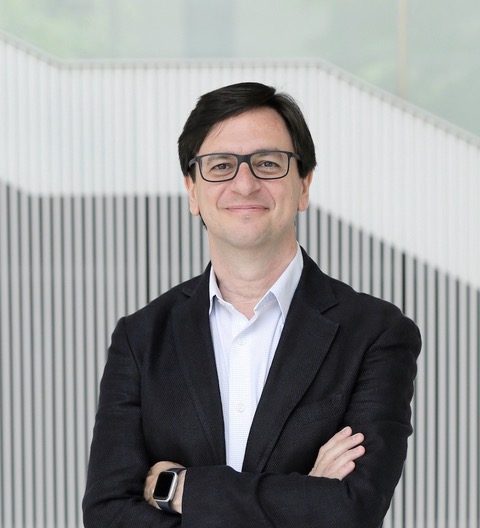
Esteban Moro, Professor, Northeastern University (Keynote 2)
Session Chair: Takahiro Yabe, Professor, New York University
Abstract:
Cities are more than collections of places connected by roads. They are dynamic networks of people’s movements, interactions, and decisions. Human behavior in cities generates intricate dependencies between businesses, neighborhoods, and infrastructures that rarely appear on maps but shape the resilience and equity of urban systems. In this talk, I will show how large-scale mobility data, AI, and network science can uncover these hidden connections and reveal the actual geometry of cities, a geometry defined not by physical distance, but by how people live, move, and interact. This perspective exposes invisible barriers that fragment accessibility, maps unexpected economic interdependencies across urban space, and uncovers the actual causal pathways through which shocks and policies propagate. Moving beyond static spatial models, our approach offers a behavioral, network-driven understanding of urban systems. That enables more equitable, connected, and adaptive cities in the face of growing social and environmental challenges.
Bio:
Esteban Moro is a Full Professor at the Network Science Institute at Northeastern University, where he directs the Social Urban Networks (SUN) group. He is also affiliated faculty at the MIT Media Lab. Previously, he held academic positions at Universidad Carlos III de Madrid, the Sociotechnical Systems Research Center at MIT, and the University of Oxford. Esteban's research lies in the intersection of big data and computational social science, with particular attention to human dynamics, collective intelligence, social networks, and urban mobility in problems like natural disaster management, segregation, and economic resilience in cities. He has received numerous awards for his research, and his work has appeared in major journals and is regularly covered by media outlets.


